Nara doesn’t shout for attention the way Kyoto does. It doesn’t need to. For nine days every August, Todai-ji Temple runs through a lineup of ceremonies that most visitors to Japan never even hear about. Monks in white robes bathe a 1,250 year old bronze Buddha by hand. A single day of prayer earns you the merit of 126 years of visits. The temple opens its gates for free after dark, and 2,500 lanterns light the walk to the Great Buddha Hall.
You can catch all four events between August 7 and August 15, 2026. Here’s what happens on each date, and how to actually get close enough to see it.
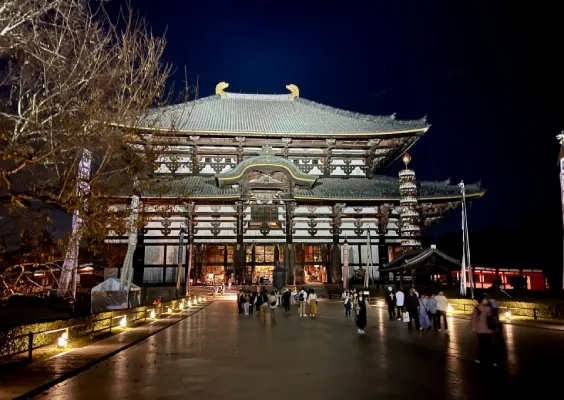
Four separate events land inside a nine day stretch this year. The Great Buddha’s annual cleaning falls on August 7. The Day of Special Merit at Nigatsu-do runs August 9. Two nights of free evening admission follow on August 13 and 14. The season closes with the Festival of Ten Thousand Lanterns on August 15. You can check exact times on Todai-ji’s official events calendar, since Buddhist ceremonies occasionally shift by an hour or two.
Every one of these events connects to Obon, the mid-August period when Japanese families honor their ancestors. The temple cleans its most sacred object, opens its doors after dark, and lights thousands of lanterns for the dead, all inside the same short window.
None of this is new. Todai-ji has run some version of these ceremonies for centuries. What’s new is how many people now show up to watch. Japan welcomed a record 42.7 million international visitors in 2025, a 15.8 percent jump from 2024. That growth hasn’t spread evenly. It concentrates on a handful of famous sights, and Nara Park’s deer area already ranks among the country’s most crowded stops.
The timing isn’t random. Obon runs across most of Japan in mid-August, and temples nationwide hold memorial services during that stretch. Todai-ji built its own calendar around it. Clean the Buddha first, hold the day of merit at Nigatsu-do, then close out the season with two free evenings and the lantern festival that marks Obon’s final night.
Once a year, and only once, Todai-ji cleans its Great Buddha from head to base. Around 120 monks and temple volunteers wash themselves at the bathhouse near Nigatsu-do before dawn, then dress in white robes and straw sandals and gather at the Great Buddha Hall by 7:00 a.m.
The ceremony opens with a ritual called hakken, in which priests chant a sutra to temporarily draw the Buddha’s spirit out of the statue. Only after that does the actual cleaning begin. Workers climb the statue itself and ride single person gondolas suspended from the ceiling to reach the face and shoulders, brushing away a year’s worth of dust and incense soot with brooms and dusters. The dust removal isn’t purely cosmetic. It clears away nitrogen and sulfur compounds that build up on the bronze surface and would otherwise corrode it over time.
General visitors can enter the Great Buddha Hall starting at 7:30 a.m., about half an hour after the cleaning begins. The event usually wraps by around 9:30, followed by a fire safety drill where staff test the hall’s water sprinkler system. Todai-ji has held this ceremony, called Ominugui, on this date every year since 1964. Before that, the cleaning happened only once during each abbot’s tenure.
Arrive by 7:30 and you’ll catch the tail end of the wash: dozens of white robed figures perched on the Buddha’s shoulders and knees, ropes and gondolas swinging overhead, and a scale you rarely get to appreciate this close. The statue’s face alone measures over 5 meters across. Standing near someone cleaning an eyebrow tells you more about its size than any photo ever will.
Head up the hill to Nigatsu-do on August 9 and you’ll find Todai-ji’s version of a jackpot day. It’s called Kudoku-bi, the Day of Special Merit, and it happens exactly once a year in honor of the hall’s secret Kannon Bodhisattva statue. Tradition holds that a single prayer here carries the same spiritual weight as 46,000 separate visits, or roughly 126 years of worship packed into one afternoon.
Votive lanterns light the approach to Nigatsu-do from 7:00 a.m. onward, and the temple runs a lantern lottery from 8:00 a.m. to 7:00 p.m. Pay 500 yen and you get a lottery ticket along with your lantern offering to Kannon. Food stalls set up around the hall selling kudoku-bi mochi, a rice cake made specifically for the occasion, and the whole grounds take on a festival atmosphere that’s rare for a Buddhist ceremony. Visitors who want a formal prayer session can join a special evening service starting around 6:00 p.m. for an additional fee.
This is the one Todai-ji event that feels genuinely local. You’ll see Nara families here in numbers you won’t find on the bigger August dates, buying mochi, lighting incense, and treating the day the way you’d treat a neighborhood festival back home. If you want a quieter, more community feeling visit to Todai-ji, this is it.
For two nights only, Todai-ji lets you in after hours at no cost. The temple closes regular admission at 5:30 p.m. as usual, then reopens the Great Buddha Hall from 7:00 to 9:00 p.m. free of charge on both August 13 and August 14.
Walk in during those hours and you’ll see the Great Buddha Hall lit up against the night sky, its silhouette even more dramatic without the daytime crowds pressing in around you. Expect the temple to cap visitor numbers if the evening gets busy, since space inside the hall stays limited no matter the hour.
If you love Nara after dark, our own Nara Night Tour: Lantern Walk at Deer Park explores this same quiet, lantern lit atmosphere on nights outside the festival calendar too.
August 13 carries extra weight. At 7:00 p.m. that evening, Todai-ji holds a memorial service for victims of disasters worldwide, both natural and man made. It’s a solemn addition to what’s otherwise a rare, low key chance to see one of Japan’s most photographed buildings without paying a yen.
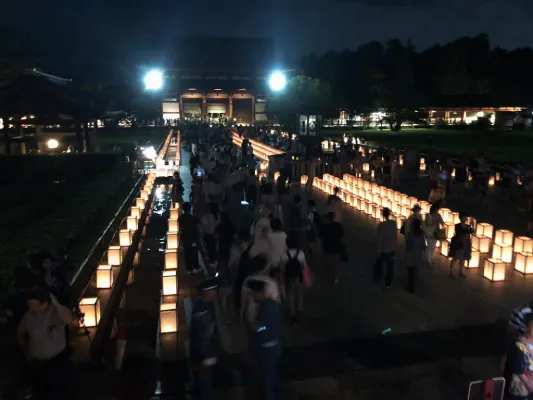
The last night of Obon brings Todai-ji’s biggest evening event of the year. Mantoh Kuyo-e, the Festival of Ten Thousand Lanterns, runs from 7:00 to 9:30 p.m. on August 15, with roughly 2,500 lanterns lit along the approach and corridors of the Great Buddha Hall in memory of ancestors and in prayer for peace.
The hall closes at its usual 5:30 p.m., then reopens for the festival. Unlike the free evenings on August 13 and 14, this one charges the regular admission fee unless you’ve applied in advance to dedicate a lantern, in which case entry is free. What sets this night apart is the kansomado, a viewing window on the front of the Great Buddha Hall that opens on only a handful of days each year. Stand outside in the lantern light and you can look straight through the window at the Great Buddha’s face without ever stepping inside.
If you want free admission on August 15, apply for a lantern dedication with the temple ahead of time. Otherwise, plan to pay the standard entry fee at the gate that evening. Either way, arrive early. This is Todai-ji’s most photographed night of the year, and the approach fills up fast.
Here’s the part nobody puts on the flyer. Nara Park, where Todai-ji sits, already struggles with overcrowding on an ordinary afternoon. Deer related injuries reached 159 in the most recently reported year, with foreign tourists accounting for 111 of those cases, and the city revised its park rules in April 2025 specifically to address it. Now stack a once a year cleaning ceremony, a 46,000 day merit lottery, and a 2,500 lantern festival into the same nine day window, and you get some of the densest crowds Nara sees all year, especially around the sacred deer that share the park with the temple.
Rev. Shoukei Matsumoto, a Buddhist monk who has written extensively on ritual cleaning practice, frames the philosophy behind ceremonies like Ominugui this way: you as a human being only exist through your relations with others. That idea, connection through shared ritual, is exactly what gets lost when you’re stuck at the back of a crowd straining to see a gondola forty meters away.
A private guide solves the logistics problem these dates create. Someone who knows Todai-ji’s layout can get you into the Great Buddha Hall before the 7:30 general entry crush on Ominugui morning, route you around the busiest stretch of Nara Park at the times it’s worst, and explain what you’re actually watching instead of leaving you to guess from a translated flyer. Global demand for exactly this kind of trip keeps climbing. Canadian travellers have long connected with Japan’s rich cultural experiences, said Yuka Suzuki, executive director of the Japan National Tourism Organization’s Toronto office, describing the enthusiasm behind 2025’s record arrivals. Nara increasingly benefits from that same pull, and a private, English speaking guide turns a confusing festival schedule into a morning you’ll actually remember clearly.
Tours 2 Nara runs small, private walking tours built around Nara’s temples, its sacred deer, and the parts of the city day trippers usually miss. Read more about who leads your tour and how the company works. The team can build a custom itinerary around any of these August dates, timing your visit to catch the Ominugui cleaning at dawn, the Kudoku-bi lantern lottery, or the Mantoh Kuyo-e festival without losing half your evening to crowd control.
If you’re planning to be in Nara this August, reach out through Tours2Nara.com to build a private tour around whichever ceremony matters most to you.
It’s called Ominugui, held every August 7. Around 120 monks and volunteers clean the statue starting at 7:00 a.m., and general visitors can enter the hall from 7:30 a.m.
Yes. General admission opens at 7:30 a.m., about 30 minutes after the ceremony starts, and the cleaning usually continues until around 9:30 a.m., so you’ll see a good portion of it.
Kudoku-bi, the Day of Special Merit, happens once a year on August 9. Tradition holds that visiting Nigatsu-do and praying to its Kannon Bodhisattva statue on this date carries the merit of 46,000 visits, roughly 126 years of worship.
Entry is free during the special night hours on August 13 and 14, from 7:00 to 9:00 p.m. On August 15, the Mantoh Kuyo-e lantern festival charges the regular admission fee unless you’ve applied in advance to dedicate a lantern.
It’s Todai-ji’s Festival of Ten Thousand Lanterns, held every August 15 from 7:00 to 9:30 p.m. About 2,500 lanterns light the approach to the Great Buddha Hall, and a special viewing window opens so visitors outside can see the Buddha’s face directly.
Take a train to Kintetsu Nara Station or JR Nara Station, then either walk about 20 minutes through Nara Park or catch the city loop bus to the Todai-ji Daibutsuden Kasuga Taisha-mae stop, a five minute walk from the temple. Regular admission to the Great Buddha Hall runs 800 yen, about 5 dollars, though several of the August events change or waive that fee.

