(1) Meeting Point
- 7:30 AM We will meet in front of the gates at the Kintetsu Kioto Station.
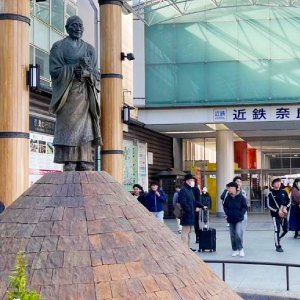
- 8:40 AM If you are already in Nara you can meet us in front of Monk Gyoki Statue near Exit 2 or East Exit of Kintetsu Nara Station (in Nara)
(2) Nara Park (Deer Park)
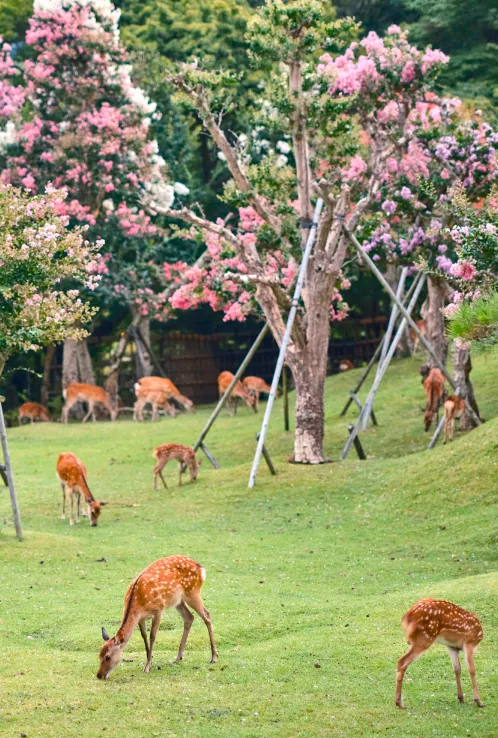
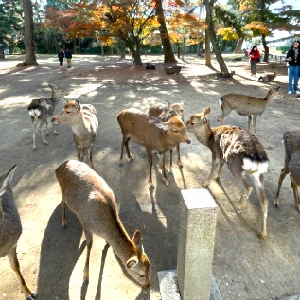
The famous Nara Deer Park is the first stop of our Nara Morning Tour.
Nara Deer Park covers 660 hectares in the heart of the ancient city. Around 1,465 wild deer roam freely here, considered sacred messengers of the gods of Kasuga Taisha Shrine since 768 CE. They are the only population of wild deer in Japan designated as a National Natural Monument — not for the deer alone, but for the unique relationship they share with the people of Nara, maintained for over 1,300 years. In the morning, the deer are calm and active, making it the best time for close encounters and photos.
Tip: Deer crackers (shika senbei) are sold by vendors near the park entrance for around ¥200. The deer will bow their heads to ask for them — a behaviour they have learned over generations.
(3) Kasuga Taisha Shrine (Shrine with Deers)
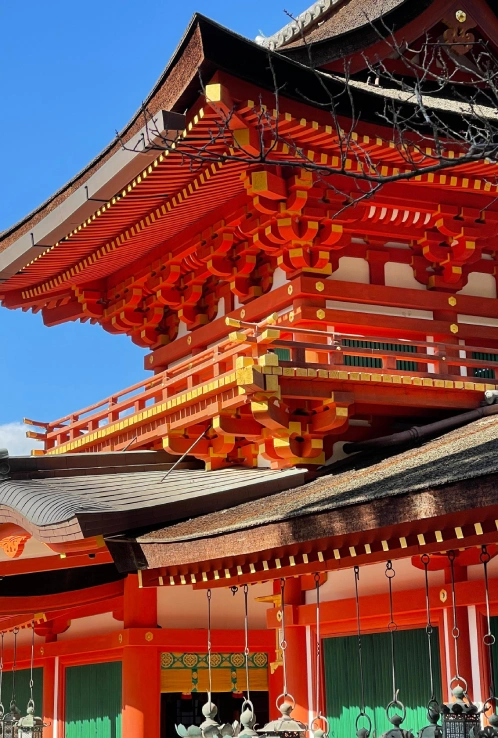
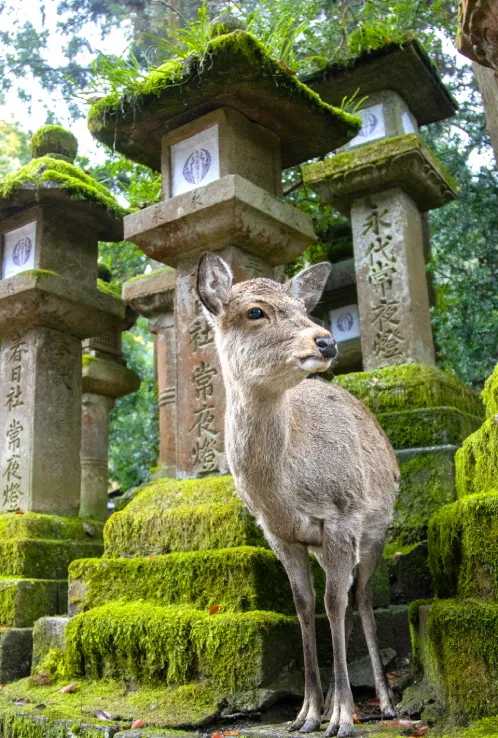
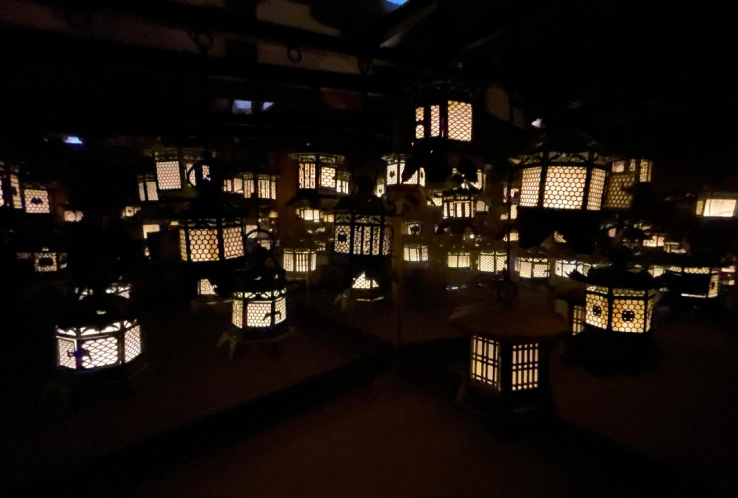
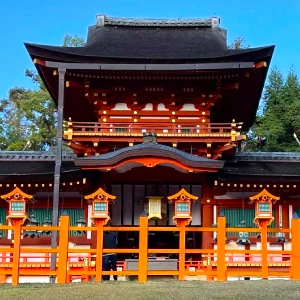
Founded in 768 CE as the shrine of the powerful Fujiwara clan, Kasuga Taisha is one of Japan's most important Shinto sanctuaries and a UNESCO World Heritage Site. Its forest pathway is lined with over 3,000 lanterns — more than 2,000 in stone and over 1,000 in bronze — donated by worshippers across the centuries. Twice a year, during the Mantoro lantern festivals, all 3,000 are lit simultaneously, creating one of Japan's most magical spectacles. In the morning, before the day-trippers arrive, this path has a stillness that is difficult to find at any other time of day.
(4) Todaiji Temple: Nigatsudo Hall (*If time permitted)
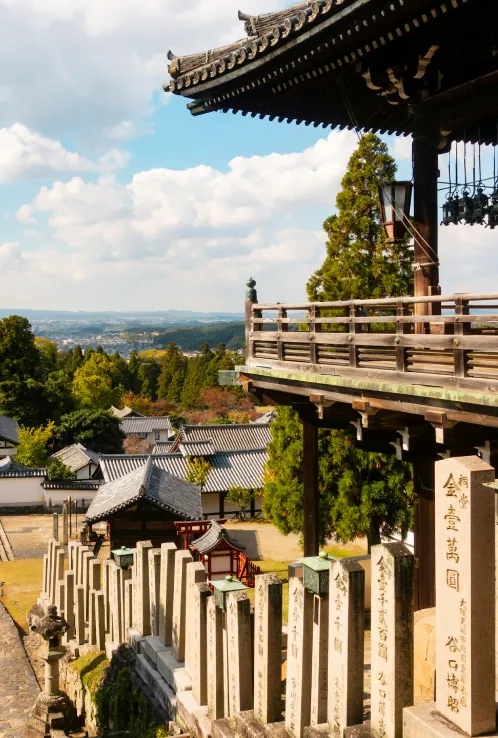
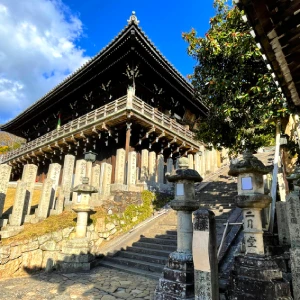
Our last stop before the Big Buddha Hall. Part of the Tōdaiji temple complex, is perched on a hillside with sweeping views over Nara. It’s famed for its annual Omizutori ceremony, a sacred fire and water ritual held since the 8th century.
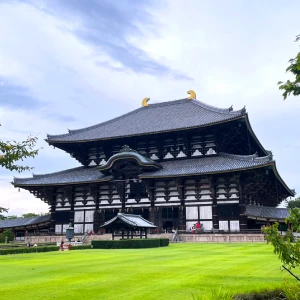
(5) Todaiji Temple: Big Buddha Hall
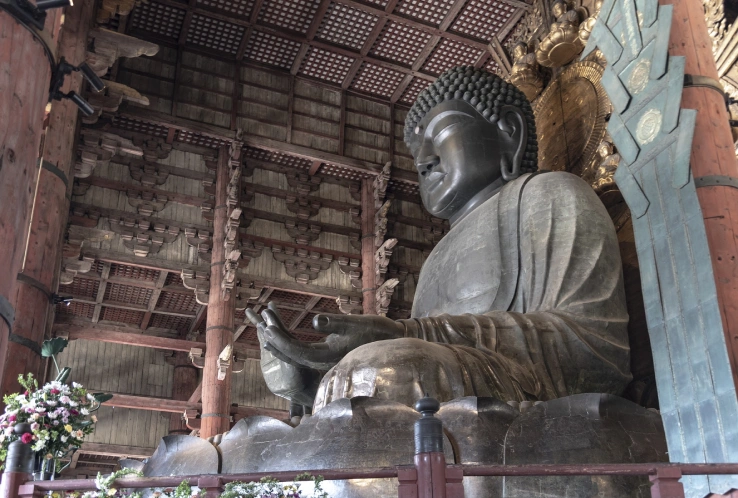
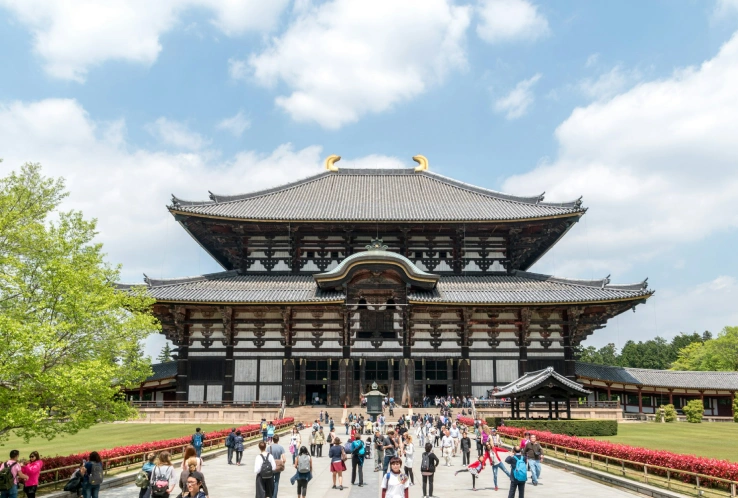
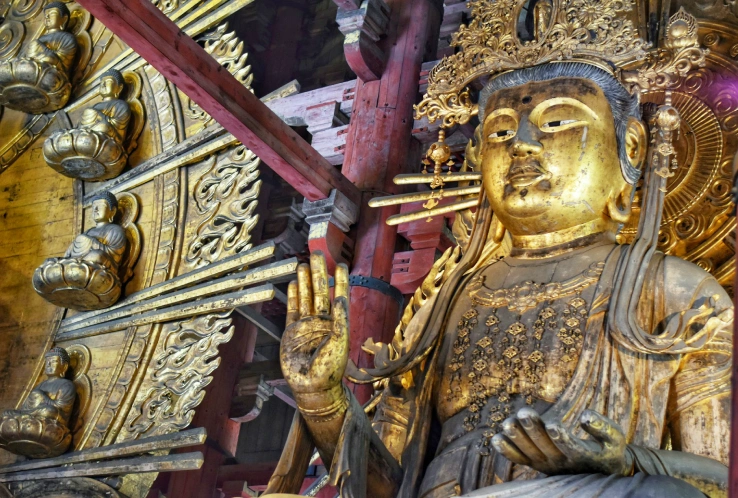
The Daibutsuden — Great Buddha Hall — is the largest wooden structure in the world. Built over 1,300 years ago, it houses the Daibutsu: a bronze Buddha standing 15 meters tall, one of the largest bronze statues in Japan. The hall was twice destroyed and rebuilt; the current structure, dating from 1709, is actually smaller than the original. Todaiji is a UNESCO World Heritage Site and one of the Eight Great Temples of Nara. Arriving early means experiencing this extraordinary space without queues or crowds.
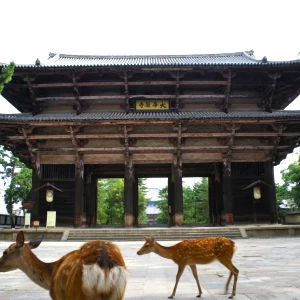
(6) Todaiji Temple: South Gate
A national treasure, is the largest gate in Japan with 25 meters tall. It houses the statues of the guardian kings, also designated national treasures, that are said to have been sculpted by the most famous master sculptors.
Of course, lots of deers will be waiting for us here as well.
(7) Ending Point
- 12:30 Ends at Nara Station of Kintetsu Railways.