Nara’s deer used to stay close to the park. Not anymore.
Japanese news crews this week filmed herds of deer crossing roads far from Nara Park, grazing in front of apartment buildings, and gathering near a public library three kilometers from the park gates. One resident watched eleven deer block a line of cars on a busy street at night. Another found a herd camped outside her building, calmly ignoring construction workers digging a few meters away. Locals now call it Nara’s “mini deer park,” and it keeps spreading.
If you’re planning a trip to Nara, this story matters. Here is what’s behind it, and what it means for your visit.
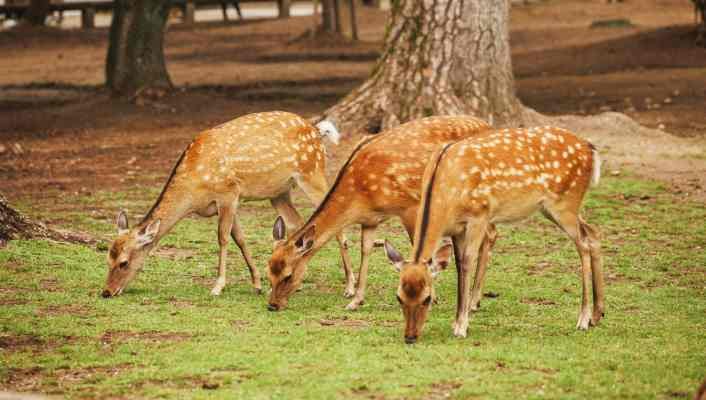
Nara’s deer hold official status as a national natural monument. For centuries, people have treated them as sacred messengers tied to Kasuga Taisha shrine. Visitors feed them shika senbei, the deer crackers sold throughout the park, and this year those cracker sales are on track to hit a record high.
More crackers and more snacks (including food visitors aren’t supposed to give them) mean more deer surviving and breeding inside the park. The population grew past what the park can comfortably hold, so deer pushed outward, searching for food and space. Wildlife groups now estimate more than 200 deer live outside Nara Park boundaries, and the number keeps climbing.
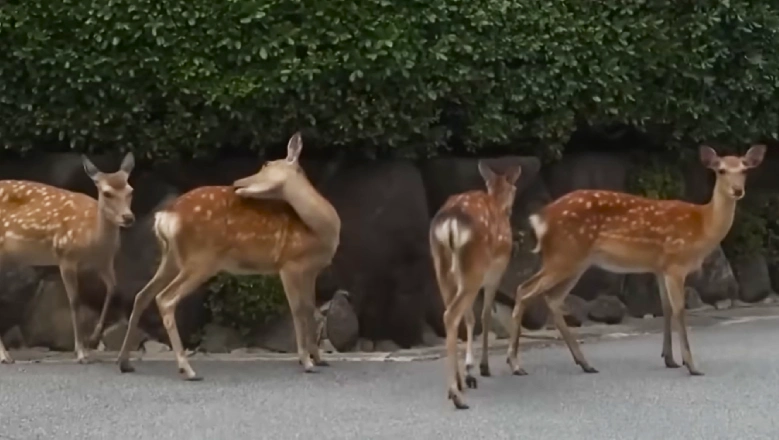
The spread comes with real consequences. In April, a deer collided with a train near Shin-Omiya Station. Farmers report deer eating rice before harvest and stripping home vegetable gardens. Residents describe adult deer with full antlers wandering close to strollers and kids walking home from school. Conservation staff try to herd the deer back into the park, but many wander straight back into the neighborhoods within days.
None of this makes the deer any less special. It just means the animal you came to see now behaves less predictably, and shows up in places nobody built for safe, close contact with wildlife.
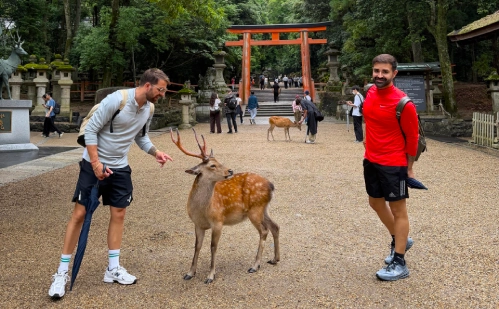
Nara Park is still the place to meet the deer. Over a thousand of them roam freely across the park grounds, and that experience remains one of the best wildlife encounters in Japan. But an unpredictable, growing deer population changes how you should approach it.
A deer with antlers reacts differently than a young doe. A deer that’s used to visitors reacts differently than one pushed out of its usual territory and stressed by traffic and construction noise. Knowing which is which, and how to read a deer’s ears and stance before you get close, keeps your visit safe and enjoyable. It also keeps the deer calm, which matters for an animal already dealing with a shrinking, changing habitat.
Our local guides walk Nara Park almost every day. They know where the herds gather at different times of day, how to feed deer the right way, and which spots let you get close without crowding the animals or putting yourself at risk. They’ll also take you beyond the deer to Todaiji Temple’s Great Buddha Hall and the lantern-lined paths of Kasuga Taisha Shrine, so you get the full story of why this city and these deer have stayed connected for over a thousand years.
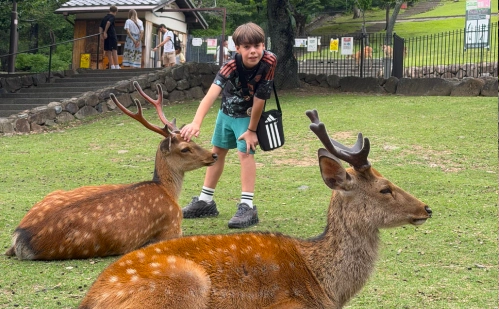
Nara’s deer story is changing fast, and more visitors are asking to see it for themselves. Our small group tours fill up quickly during peak travel months, so book early if you want a guaranteed spot.
Visit www.tours2nara.com to check available dates and reserve your guided tour of Nara Park. Come see the deer the way they’re meant to be seen, safely, respectfully, and with someone who knows exactly where to take you.

